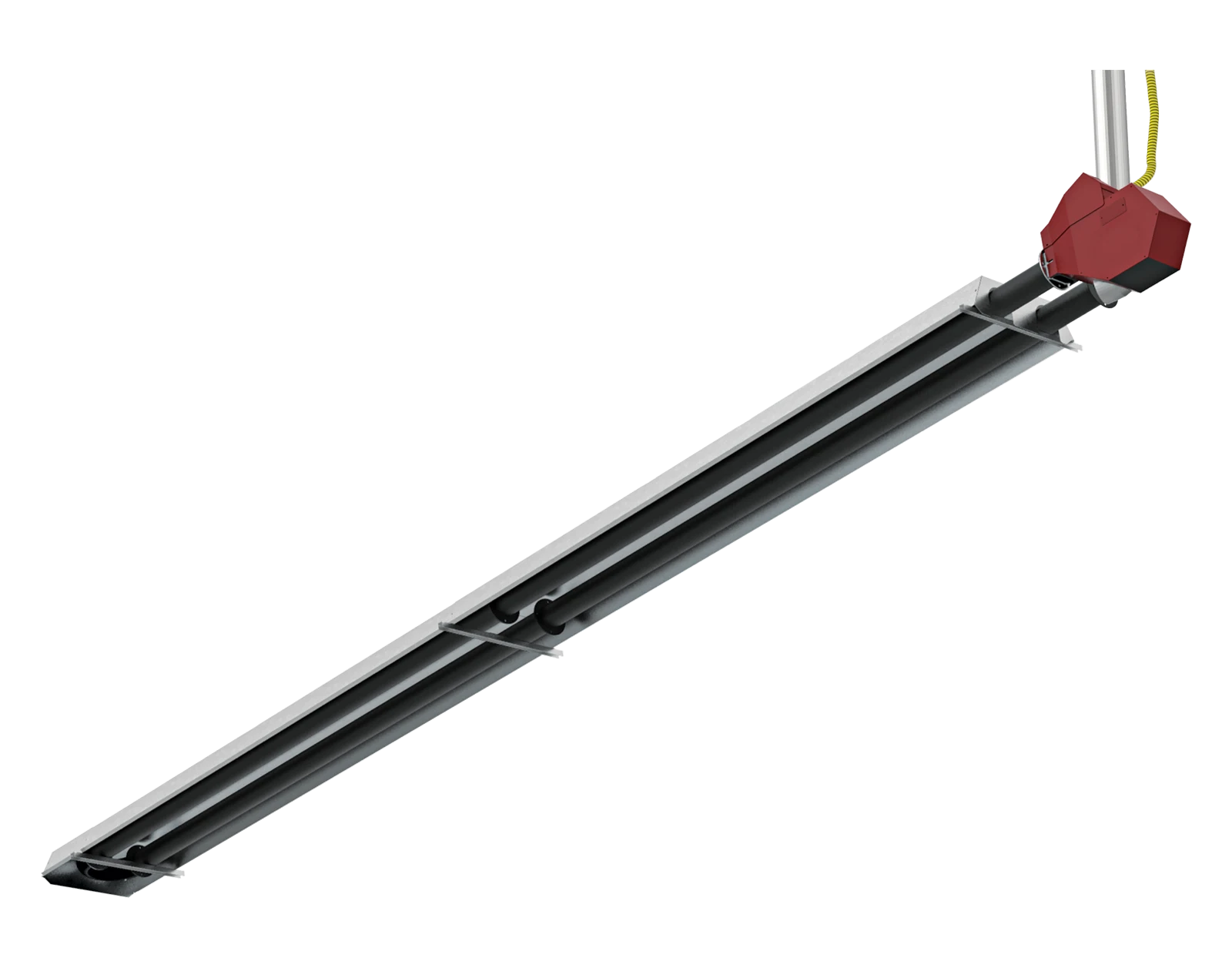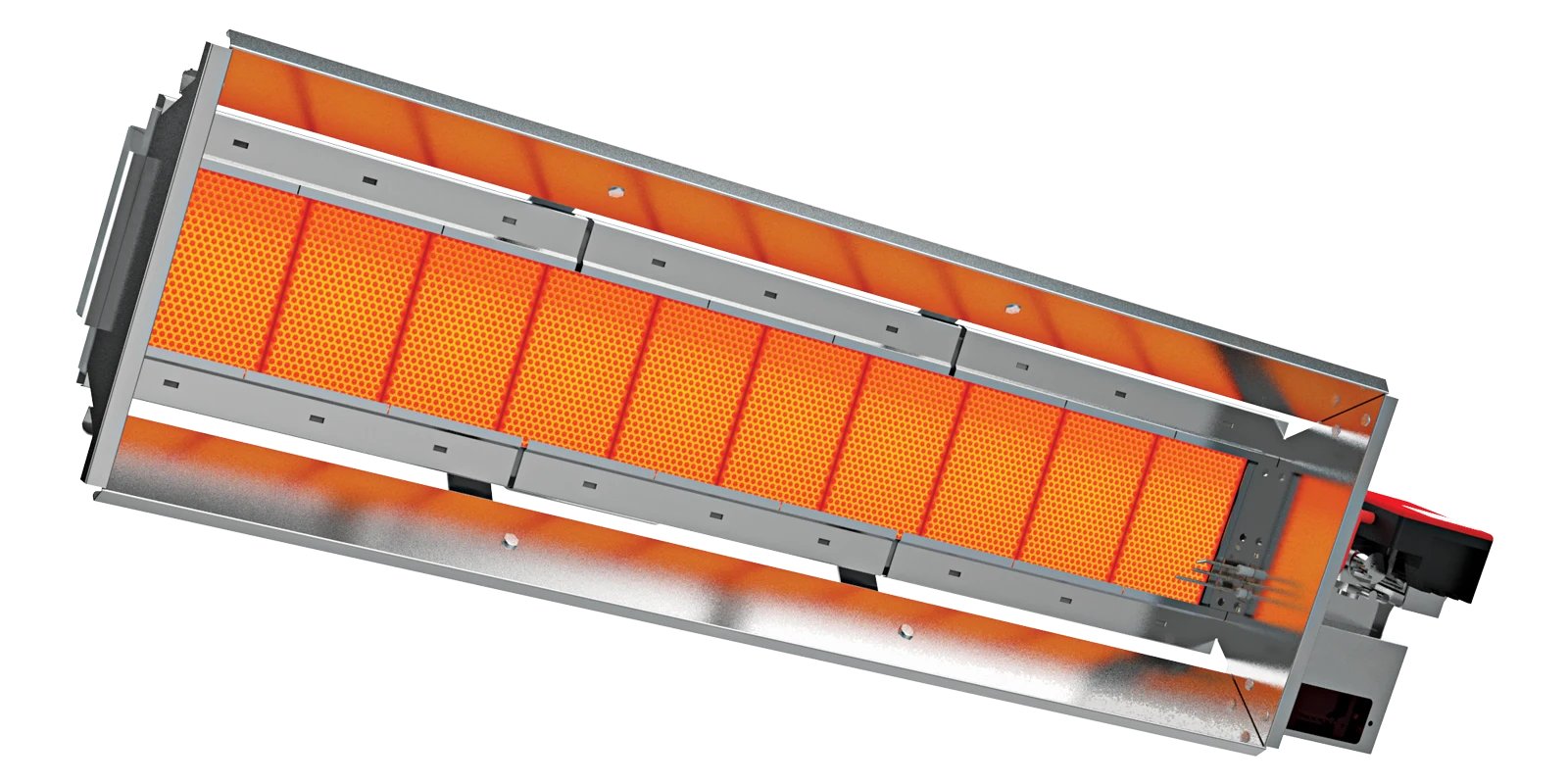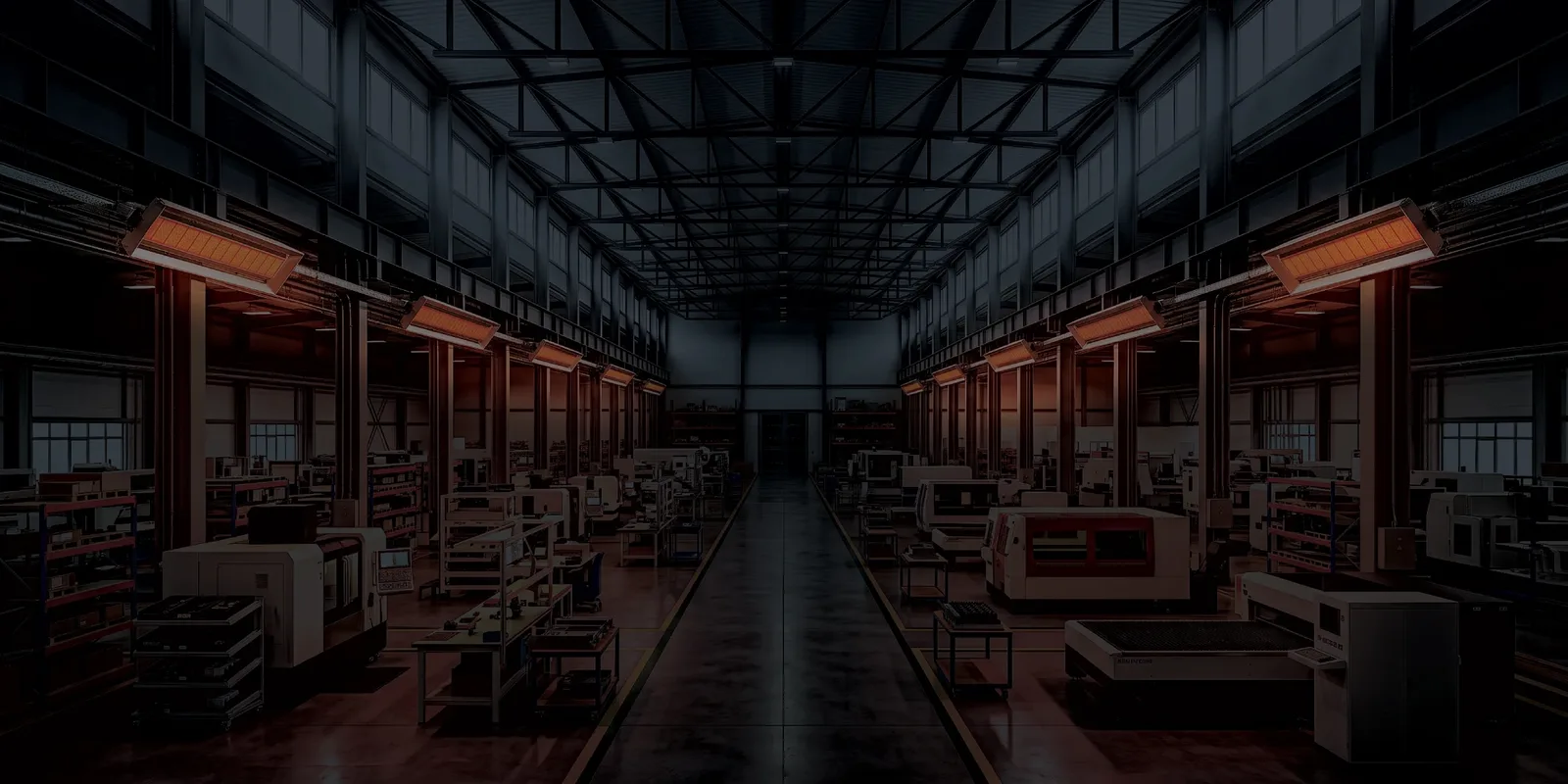
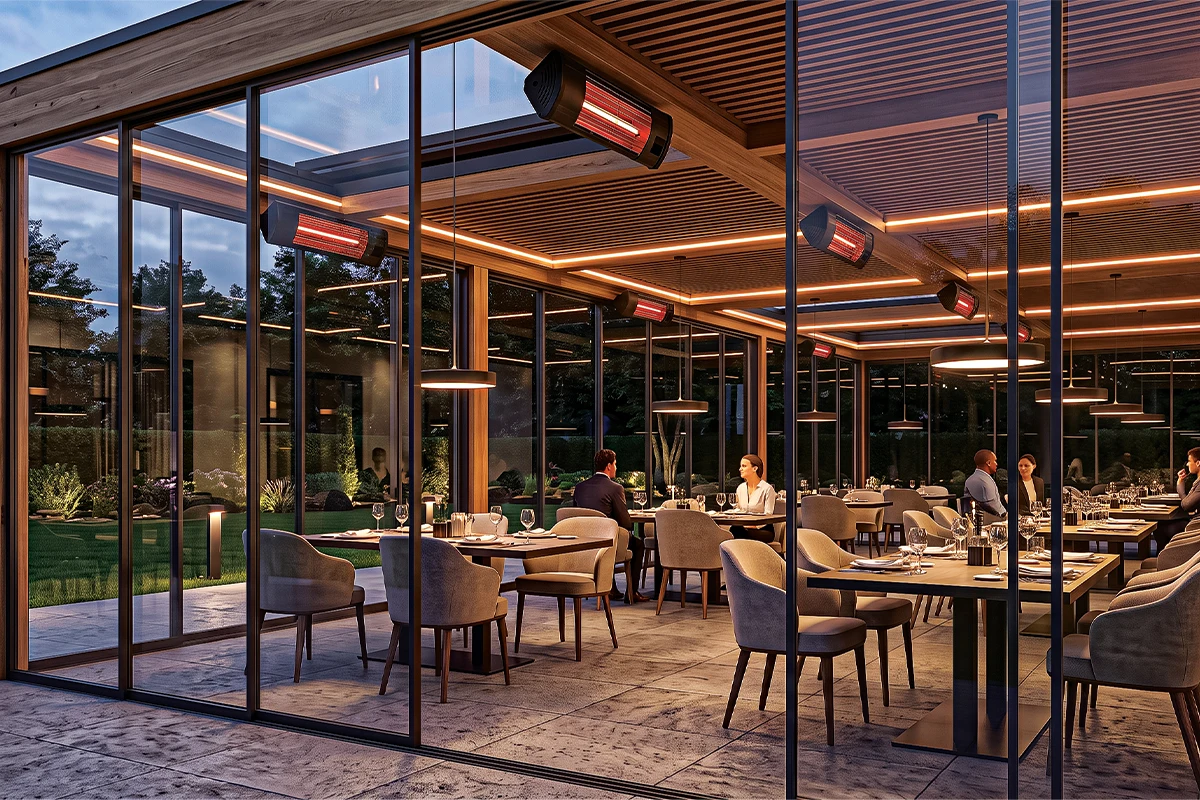
Electric infrared heaters transfer heat directly to people and surfaces in the target area through radiation. This gives them a different application approach from conventional warm-air heating. They may be considered when warmth is needed in a specific seating, waiting or working zone rather than throughout an entire space.
Café and restaurant terraces, balconies, semi-outdoor waiting areas, entrance zones and selected workstations are potential applications. However, not every electric infrared unit is suitable for every outdoor condition. Equipment protection, installation method and the surrounding environment must be checked.
How does infrared warmth feel?
When the heater operates, radiant energy is absorbed by people and surfaces within its effective direction. This can create a sensation of warmth in the target zone even before the air temperature reaches the same level. Walls, glazing, wind, mounting height and distance from the heater can all influence the effect.
How should capacity and positioning be selected?
First define the target heating zone. Consider where people sit or work, the possible mounting height, radiation direction, potential obstructions, electrical supply and the number of units operating at the same time. Poor positioning can create uneven heat distribution.
Can infrared and warm-air systems be used together?
In some projects, general space heating and localised heating may be considered together. The suitability of this approach depends on the use pattern and engineering assessment.
Lumos assesses electric infrared solutions according to the way the space is used, available electrical infrastructure and the required comfort zone. Product selection and layout should be based on project information.
Frequently Asked Questions
Let's assess an infrared heating solution for your space.
Discuss Your Project